
Reserve Planning, Envelope Restoration, and Lessons from Two California Communities
In a revealing and informative interview with TimeSharing Today, Gary Porter and Jay Grant of Facilities Advisors Inc. shared the intricate details behind two expansive, multi-year building envelope restoration projects in California. These weren’t typical reserve study cases—in fact, they demonstrate how the traditional boundaries of reserve planning are being redefined.
In the process, they’ve created a blueprint for how aging condominium communities—and, by extension, timeshare resorts and other multi-family properties—can meet the challenges of deteriorating infrastructure, changing materials, and evolving legislation with financial and strategic foresight.
From Reserve Study to Rebuild
Gary Porter has worked with reserve studies for decades. His firm, Facilities Advisors Inc., provides detailed reports that associations use to plan for major capital repairs and replacements. “Most of the time,” Porter said, “we prepare a study, and the board uses it to develop a budget and move forward. But every once in a while, we come across projects that require a much deeper, more hands-on approach.”
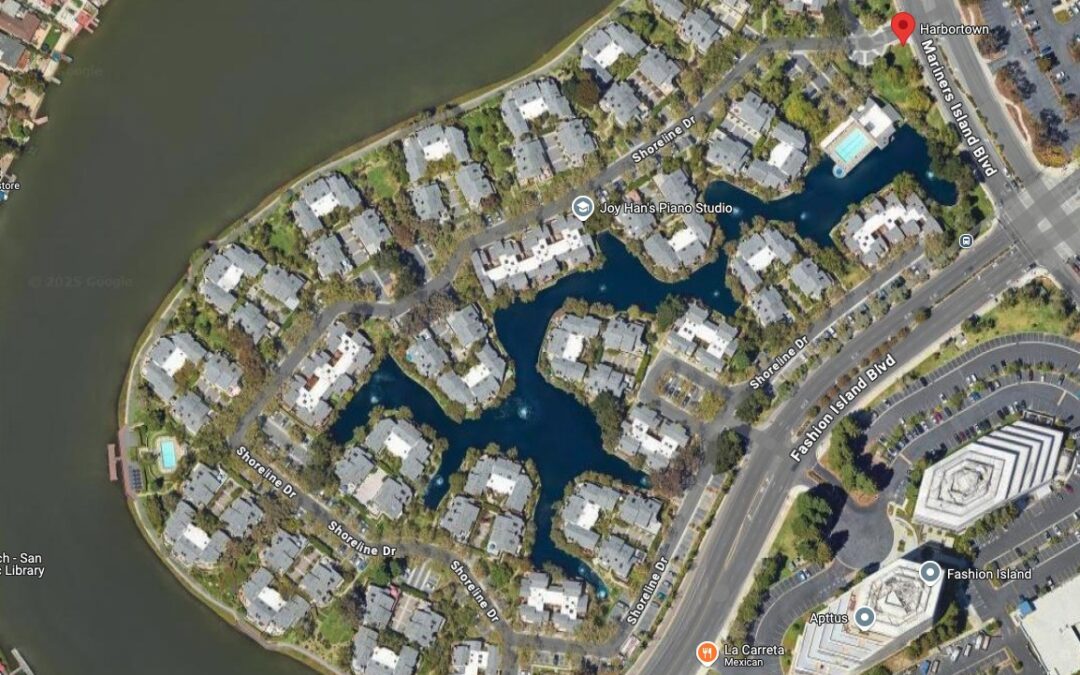
That was the case with two Bay Area properties: one in Daly City with 50 buildings and 326 units and another in San Mateo with 31 buildings and 312 units. Both were approaching 50 years of age, and both revealed major structural concerns that went beyond the scope of a routine reserve study.
Enter Jay Grant. Porter brought Grant into the projects after recognizing his unique qualifications. “Jay had the time, the background, and the skill set to guide these associations through something far more involved than a reserve update,” said Porter.
Grant’s Unique Background
Jay Grant’s professional journey has taken him from military service to financial services to national infrastructure protection after 9/11. His work included being a principal in developing port security legislation and championing federal security projects for port authorities and international borders in the U.S. and abroad.
Later, Grant moved into a condominium in Washington State—an experience that would change his trajectory. “The building had significant deficiencies,” he explained. “We had elevator misclassifications, roof leaks, and other issues that ultimately led to undertaking an entire envelope capital improvement project, which Jay calls Comprehensive Building Envelope Renovations (CBER). CBER is called out in the architectural plans, forming the primary thermal barrier between the interior and exterior environments.
That hands-on involvement taught me everything about how these buildings age and how ill-prepared many associations are.”
Grant found Porter’s book on reserve studies—an in-depth 400-page guide—and reached out to discuss opportunities. Around 2020, he joined the Facilities Advisors team and took on two large-scale California projects.
Legal Mandates Reshaping the Industry
What catalyzed these projects wasn’t just structural aging—it was California law.
Senate Bill 326 (SB 326), which took effect in 2020, requires regular inspections of exterior elevated elements (EEEs) more than six feet above ground. These include balconies, decks, exterior stairs, landings, and walkways. The inspections were required on or before January 2025, must be performed by licensed structural engineers or architects, and must be repeated every nine years. Findings must be documented and acted upon.
The Davis-Stirling Common Interest Development Act, which governs California HOAs, now includes stricter reserve funding requirements and mandates detailed disclosures about physical deficiencies, underfunded reserves, and structural risks.
“These laws don’t just recommend best practices anymore,” said Grant. “They impose a legal obligation to assess, disclose, and fund repairs—particularly when lives and safety are at stake.”
Grant noted that these legal requirements can reveal previously hidden damage. In San Mateo, SB 326-mandated inspections showed widespread deterioration in the envelope and elevated elements. The financial requirements to address just a portion of the decks were an estimated $15M; this prompted the board to initiate a review of a complete restoration.
In Daly City, an architectural report confirmed that the buildings had ten years of structural life left—seven when Grant reviewed the documentation for the reserve study. After completing his first reserve report of the property, the HOA board began its comprehensive property review and realized the justification for immediate intervention.
The Importance of the Envelope
The building envelope encompasses all the exterior elements—cladding, siding, roofing, windows, trim, balconies, decks, and structural projections. When any component of the envelope fails, moisture intrusion accelerates internal decay, undermining insulation, wood framing, metal reinforcements, and even electrical and plumbing systems.
“Everything has a lifecycle,” said Grant. “If water gets in, deterioration accelerates. You can’t always see it, but the damage is happening—and you’ll eventually pay for it, one way or another.”
He emphasized that the envelope must be included in reserve studies, even for newer properties. “You don’t wait until failure. You plan now, even if your siding is only five or ten years old. Otherwise, you’re setting up the next board—or the next generation of owners—for financial failure.” Ensuring envelope components are included in any reserve plan is essential.
Why Every Property Type Must Plan for This
Though these examples involved condominiums, Grant and Porter stressed that timeshare resorts, cooperatives, townhome developments, and other multi-family properties face the same vulnerabilities.
- Timeshare properties may rely on rotating boards and short-term governance, leading to insufficient long-term planning.
- Senior housing and retirement communities often defer maintenance to preserve affordability—at the expense of the physical property.
- Mixed-use buildings face complexity when retail and residential components are governed separately but share critical infrastructure.
“These properties must act like businesses,” Grant said. “The day you build a structure is the day you should start planning to replace it.”
Developing a Strategic, Phased Plan
The routine reserve study, as in the case of both Daly City and San Mateo, requires an in-depth transition beyond that of an analyst and that of a quarterback. Grant teamed up with Thomas Daniel, a multi-family building envelope expert and specialty contractor with an accounting degree and over 100 envelope projects.
They collaborated to establish a comprehensive financial pro forma that breaks down every aspect of costs related to the envelope and used a company to bid the entire project, offering a near-exact cost per building and allowing for accurate forecasting. This requires using the architectural plans; if unavailable, as in the case of the San Mateo project, technology imaging software is used for accurate measurements; then, the data is used to coordinate with engineers, architects, contractors, and lenders.
The pre-construction process concludes with stamped architectural drawings, and a final pro forma is used for construction bidding.
The reserve study at this point includes the construction cost, mirroring the build-out timing, the HOA loan or special assessment, and the annual financial cost to the owners to support the construction.
In Daly City, the current-year reserve study incorporates the $62M restoration project. The pro forma was used to document the expected three-and-a-half-year costs, offset by the construction loan and the long-term HOA 30-year mortgage costs. Upon completion of the project, the reconstructed buildings will begin their next 40-year life cycle based on actual cost. Currently, twelve buildings, at different stages, are under construction, with 70 workers on-site daily. The long-term HOA amortized loan rather than an individual unit special assessment was used.
In San Mateo, a similar process is unfolding. After presenting a fully documented capital reserve management plan to the board, including pro forma costs and invasive inspection findings, the board voted to favor the complete envelope restoration.
To assist the Board in putting all the facts together, Grant created a website that provided the Board with a step-by-step explanation of the legal context, costs, materials, timelines, and pro forma. The project is now entering the second phase of board planning. The project is expected to cost $45M. It is a hard decision to make, but faced with the $15M SB326 construction facing them, the envelope spend is brought into perspective, and the right long-term choice.
New Materials, Long-Term Savings
These projects also offer a chance to modernize. Daly City’s plan replaced old cladding with durable and long-lasting PVC Trim and Composite Siding that never requires painting—eliminating the need for a projected $30 million in repainting costs over the next 30 years. That type of component selection can offset originally planned expenditures and minimize the overall costs to the HOA and unit owners as part of the loan payments.
Grant also emphasized hidden savings. “If you’re already spending significant dollars yearly on repairs, you’re just throwing money into a leaking ship. A new envelope reduces those costs—and the building becomes nearly new again.”
Envelope restoration also provides an opportunity to evaluate plumbing, wiring, and other concealed systems. Some buildings may consider incorporating mini-split HVAC systems, taking advantage of exposed walls to modernize without further disruption, and hiding the pipes.
Working with Owners and Banks
Grant stated that community communication is one of the greatest challenges—and strengths. Developing a communication program for each community is essential based on demographics and needs. One community, home to many retired residents on fixed incomes, may need a slower, more compassionate educational process. The other, filled with tech professionals, responded well to digital dashboards and data visualizations.
“Most banks don’t know how to underwrite (secure) an HOA loan,” Grant said. On my condo, I spoke to multiple banks for my condo project and tried to explain how to secure collateral from an association. After further investigation, I eventually found some banks were familiar with this type of lending; they, however, are generally not your local bank.
At the time, part of this was not understanding the HOA financing industry for large loans.” Envelope restoration, especially in large projects, can exceed some of the bank’s normal limits. Hunting for a $25M to $75M 30-year HOA loan can be a chore.
Large project HOA loans are typically structured similarly to construction loans. They begin as lines of credit during the restoration period and roll into long-term mortgages obligated by the HOA. The loan can be part of the HOA assessment for the multiple-year loan rather than a special assessment attached to a unit.
This eliminates the need for disruptive assessments while preserving liquidity. Of course, often, the HOA’s legal documents have specific provisions that boards and owners must adhere to when borrowing funds for such projects.
Industry Implications and a Call to Action
Porter and Grant agree that the implications extend far beyond these two California communities.
“Jay did what no one else could,” said Porter. “While engineers focused on balconies and contractors focused on siding, he connected the dots. He showed that treating these problems holistically saved millions—and probably saved these communities from catastrophic failures.”
With more buildings aging into their fifth decade and more states adopting laws like SB 326, the message is clear: Associations must act proactively or face exponential costs and risk.
“The earlier you plan, the less you’ll pay,” said Grant. “It’s not about reacting to a leak. It’s about building responsibly—for now and for the next 40 years.”
To learn more about building envelope capital improvements, contact: Jay Grant, Facilities Advisors, jgrant@facilitiesadvisors.com