
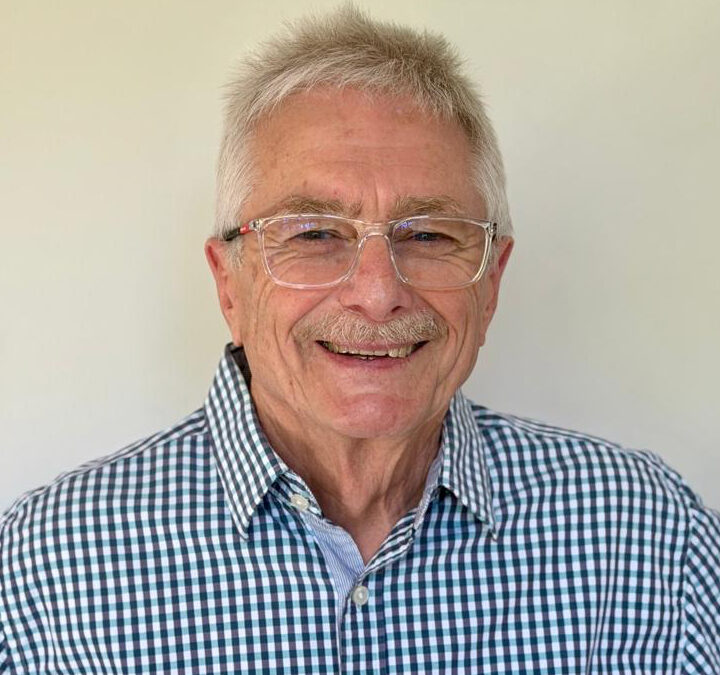
Mike Pnematicatos — Architect of Innovation in Vacation Ownership Technology
From Cape Town to Global Impact
Mike Pnematicatos’s journey from a seaside village on South Africa’s Cape Peninsula to global influence in vacation ownership technology is a study in applied ingenuity. Born into a multicultural family with Greek and Italian roots, and with ancestry stretching back 350 years, he grew up with a global perspective that later shaped his business approach.
Strong in mathematics and science, he earned a Bachelor of Science in Civil Engineering from the University of Cape Town and a Bachelor of Commerce in Business Economics and Statistics from UNISA. After early roles with government agencies and private firms — and a stint in construction contracting — he was poised for a different kind of building — business models.
The Birth of Fractional Ownership
In 1983, a proposal to develop holiday apartments on South Africa’s Natal coast put him at the intersection of real estate and hospitality. He secured financing, assembled a team and created a vertically integrated operation encompassing land acquisition, design, construction, and resort management.
When South Africa’s economy faltered in the mid-1980s and 20–30% of sales collapsed, he refused to fold. A potential buyer’s question — “Can two people purchase one apartment together?” — sparked a larger idea,
“Why just settle for two?”
He and his attorney quickly drafted a legal framework for fractional ownership with rotating rosters, tailored to his market. Skeptical sales teams soon saw the results — repossessed units moved, banks brought him distressed properties to convert, and a potential crisis became sustained success.
Pioneering the Points Revolution
Learning about the Swiss Points concept, he again translated inspiration into infrastructure. He launched what became the first Points club in the English-speaking world, shifting the value proposition from bartering a fixed week to using a flexible currency.
As he likes to explain, “You might have a chicken; you can only swap your chicken for other chickens. We give you currency — now you can buy eggs, sausages, bread — whatever you want.” Owners embraced the flexibility and freedom.
By 2000, when Pnematicatos sold his businesses, his companies represented roughly 20% of South Africa’s timeshare owners — about 30,000 members — some 20,000 of them converted from fixed weeks to points. Operating under the banners of The Leisure Corporation and Club Resorts International, the enterprise managed 16 resorts and ran fully integrated functions from marketing and sales to reservations and reception including management fee collection and customer relationship management.
RCI Acquisition and Global Expansion
The scale and efficiency of his model drew the attention of RCI, which acquired the businesses. For three years, he consulted with RCI across Europe, the UK, the U.S., and Australia as the company rolled out what became RCI Points. The legal frameworks and operational models he created decades ago continue to inform Points documentation industry-wide.
The Genesis of Merlin
After selling to RCI in 2000, he tried retiring — briefly. He had held onto one essential asset — his software development team. With lead developer Jeetesh Daya, early team member Katja Schrecker, and contributions from his accountant daughter, Martine, he spent five years building Merlin — initially envisioned as a “marketing magician,” ultimately a complete resort management platform.
Even in a pre-Internet environment, the objective was clear — connect properties, enable reciprocal trading, and unify operations.
Built on Strong Foundations
Pnematicatos designed Merlin through the vision of an engineer — start with the foundations. Its normalized relational database gives the system the structural strength to scale — new capabilities slot in cleanly, like adding floors to a building designed to bear the load. From the outset, Merlin supported multiple ownership types — Whole, Fractional, Timeshare, Points — and hotel operations across numerous properties on a single platform.
That architectural discipline — born of actually running vacation ownership businesses — remains a differentiator over conventional software built in isolation from operations.
A Team That Stays
The product philosophy extends to people. “People don’t leave Merlin,” he says. The company cultivates a family-style culture that rewards value creation rather than headcount metrics. Long tenure compounds institutional knowledge, and the team shares its operator’s lens — understanding how software must serve the real world.
Global Market Presence
Since launching in Europe in 2006, Merlin has earned a diverse, international client base. In Scotland and Spain, Macdonald Resorts operates roughly seven properties with about 700 apartments on Merlin for their timeshare operations.
In Australia and across the South Pacific and parts of Asia, Accor Vacation Club serves about 30,000 members and has remained with Merlin for over a decade. In South Africa, Southern Sun Resorts — the country’s largest hotel and casino brand — uses Merlin to run six timeshare properties comprising roughly 800 apartments.
In the Asia–Pacific region, Club Wyndham Asia has invested heavily in the platform. Merlin’s strengths in multicurrency and multilanguage environments — including Chinese, Japanese, Korean, and Indonesian — underpin these deployments in complex, cross-border markets.
Beyond Software — Strategic Partnership
Pnematicatos often sees a gap within large organizations — executives set strategy, middle management must execute, and no one serves as the entrepreneur who translates vision into workflow. Merlin fills that gap.
When clients ask for a capability, the team evaluates both the business outcome and the operational steps, then aligns software, process, and training — a technology platform coupled with operator-grade guidance.
The American Opportunity
Despite the U.S. industry’s size, he views it as underserved technologically — especially for hybrid operations combining hotels, timeshares, fractional ownership, and condominiums.
Practices like mailing checks to lockboxes are artifacts of a slower era. The broader point is progress — guests and owners expect real-time, self-service experiences.
Booking, banking weeks, paying fees, and resolving routine questions should be instant and mobile-first.
A Proof-of-Concept You Can Touch
To lower adoption friction, he proposes a tangible trial — Merlin will configure a fully functional, branded system using a prospect’s real data — inventory, owner records, balances, and future bookings. In three to four weeks, owners could book online, pay maintenance fees, bank weeks for rental pools, and confirm reservations — all self-service. AI agents — connected to phone, WhatsApp, and email — answer property-specific questions around the clock.
Pricing is disclosed before the build. If the property likes the “puppy,” they keep it; if not, they return it — having risked only the time needed to share data.
AI With Substance
Pnematicatos resists buzzwords, but embraces AI where it delivers. Internally, the team uses AI-assisted coding to ship polished interfaces and features in hours instead of months, with designers — including Mike — now building more of the front-end using AI tools.
Client-facing, property-specific agents trained on each resort’s rules, constitutions, and procedures can now handle calls, emails, and WhatsApp messages accurately and consistently, 24/7/365. He’s adamant about the next leap — agentic user interfaces.
Instead of navigating screens and reports, staff will ask for outcomes in natural language — “Send statements to all accounts 90 days in arrears” — and the system will assemble data, previews, and approvals in one conversational flow.
Invisible Power
Merlin runs quietly behind the brand. Consumer-facing portals, rental sites, resale platforms, and guest apps present the client’s identity — not Merlin’s.
For management companies overseeing multiple properties, even business-user interfaces can be white-labeled — consistent branding on top of a unified, enterprise-grade core.
A Vision Forged by Operations
He didn’t learn vacation ownership after writing software — he built software after transforming vacation ownership. He invented fractional models during an economic crisis, championed Points to replace inflexible bartering, and operated fully integrated resort businesses. Merlin distills that lived experience into architecture and workflows that anticipate real operational needs.
What Comes Next
Across industries, technology has reset expectations — self-service, real-time access, seamless digital journeys. Many vacation ownership operations still run on processes built for another era.
The opportunity isn’t merely to swap old software for new — it’s to rethink how properties serve owners, how data informs decisions, and how teams execute strategy without friction. Merlin is his answer — foundations strong enough to support whatever comes next— a team that understands the business end-to-end— and a proof-driven path to adoption.
From South Africa’s coast to fractional and points innovations, from selling to RCI to building globally deployed infrastructure, his career shows a pattern — identify the problem, craft the elegant solution, then develop the capacity to deliver at scale. With Merlin’s international track record and a low-risk proof-of-concept for U.S. operators, the question for American properties is simple — when will you adopt a dynamic, new vision for property management technology?
Let’s start a conversation, contact:
Mike Ashton
SVP Resort Partnerships and Revenue Growth
1-246-230-4982
mikea@quickmerlin.com
www.easymerlin.com